Kafka vs RabbitMQ vs Azure Service Bus: Which One Should a .NET Developer Pick?

Apache kafka vs Service Bus

Why this question keeps coming up Sooner or later, every team building more than one service asks: “How do these services talk to each other without being glued together?” The usual answer is a message broker, and then the argument starts. Someone says Kafka, someone says RabbitMQ, and the Azure person on the team says … Read more
Kafka for .NET Developers: Why Distributed Systems Need It, and How to Start

Reading time: about 10 minutes The problem Kafka solves Picture a small online store. A customer clicks “Place Order,” and the Order service has to: The first version is usually the obvious one: the Order service calls each of these directly. It works, until the email provider has a slow afternoon and checkout starts timing … Read more

Tries: The Data Structure Behind Autocomplete, IP Routing, and Search Systems

When you type a few characters into a search box and suggestions immediately appear, it is easy to assume that the application is simply filtering a list of strings. For a small dataset, that might actually be enough. But imagine a system containing millions of products, search queries, usernames, locations, commands, or other terms. Now … Read more

Heaps & Priority Queues: From Top-K Problems to Real-World System Scheduling

Imagine you are running a backend service that has thousands of tasks waiting to be processed. Some tasks are normal. Some are urgent. Some have been waiting for a long time. Some consume significantly more CPU than others. Now suppose your worker has capacity to process only one task at a time. Which task should … Read more

Hash Tables & Caching: Design and Optimization for High-Throughput Systems

If you have worked on a backend application, chances are you have used a hash table even if you didn’t explicitly think about it. A Dictionary<TKey, TValue> in C# is a hash table. A cache backed by Redis relies heavily on key-based lookup. A database index is designed around the same broader idea: make finding … Read more

Arrays & Strings: Advanced Patterns — Prefix Sums, Two Pointers & Sliding Window

Arrays and strings are usually among the first topics we learn when starting with data structures and algorithms. At first, the problems seem straightforward: Then the problems start getting interesting. You are given a large array and asked to find a particular subarray. You need to process millions of events and identify activity within a … Read more

Mastering the Sliding Window Technique

A Complete Guide with LeetCode Examples, Patterns, and Interview Tips By Dhirendra Singh Negi Table of Contents Introduction The Sliding Window technique is one of the most frequently asked coding interview topics in companies like: If you’ve solved problems like: then you’ve already used the Sliding Window technique. The biggest advantage is reducing an O(n²) … Read more

Mastering the Two Pointer Technique (With C# Examples)

Want to solve array problems in O(n) instead of O(n²)? The Two Pointer technique is one of the first optimization patterns every software engineer should master. Whether you’re preparing for any interview Google, Microsoft, Amazon, or any product-based company, understanding the Two Pointer technique can turn brute-force solutions into elegant, interview-winning algorithms. In this guide, … Read more

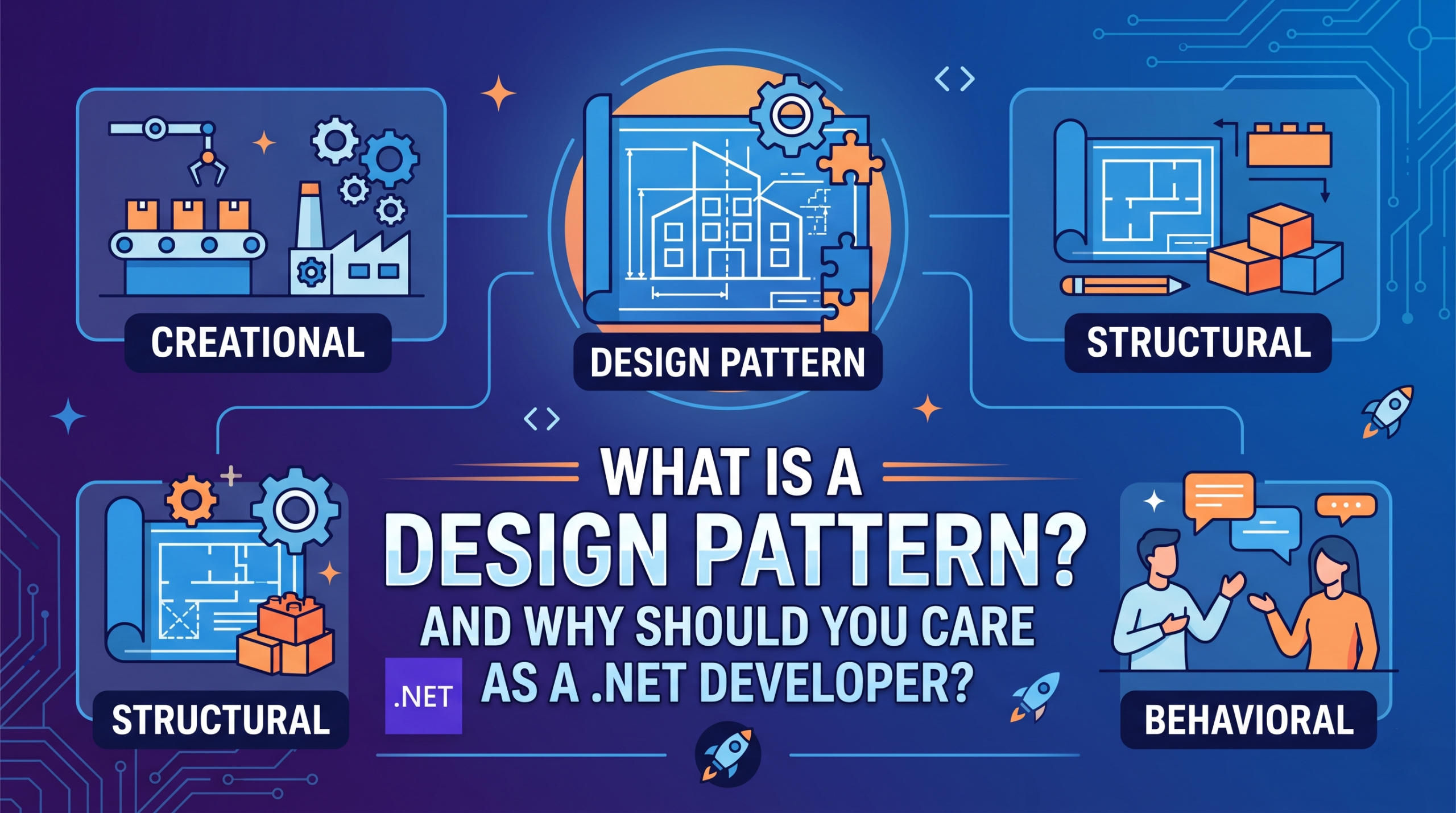
What is a Design Pattern and Why Should YOU Care as a .NET Developer?

designpatterns

A Friendly Guide for Beginners and Intermediate Developers 👋 Hey there, fellow developer! Ever felt like you’re reinventing the wheel every time you write code? Or maybe you’ve looked at a senior developer’s code and wondered, “How did they know to structure it that way?” The secret sauce? Design Patterns! Let’s break this down in a … Read more

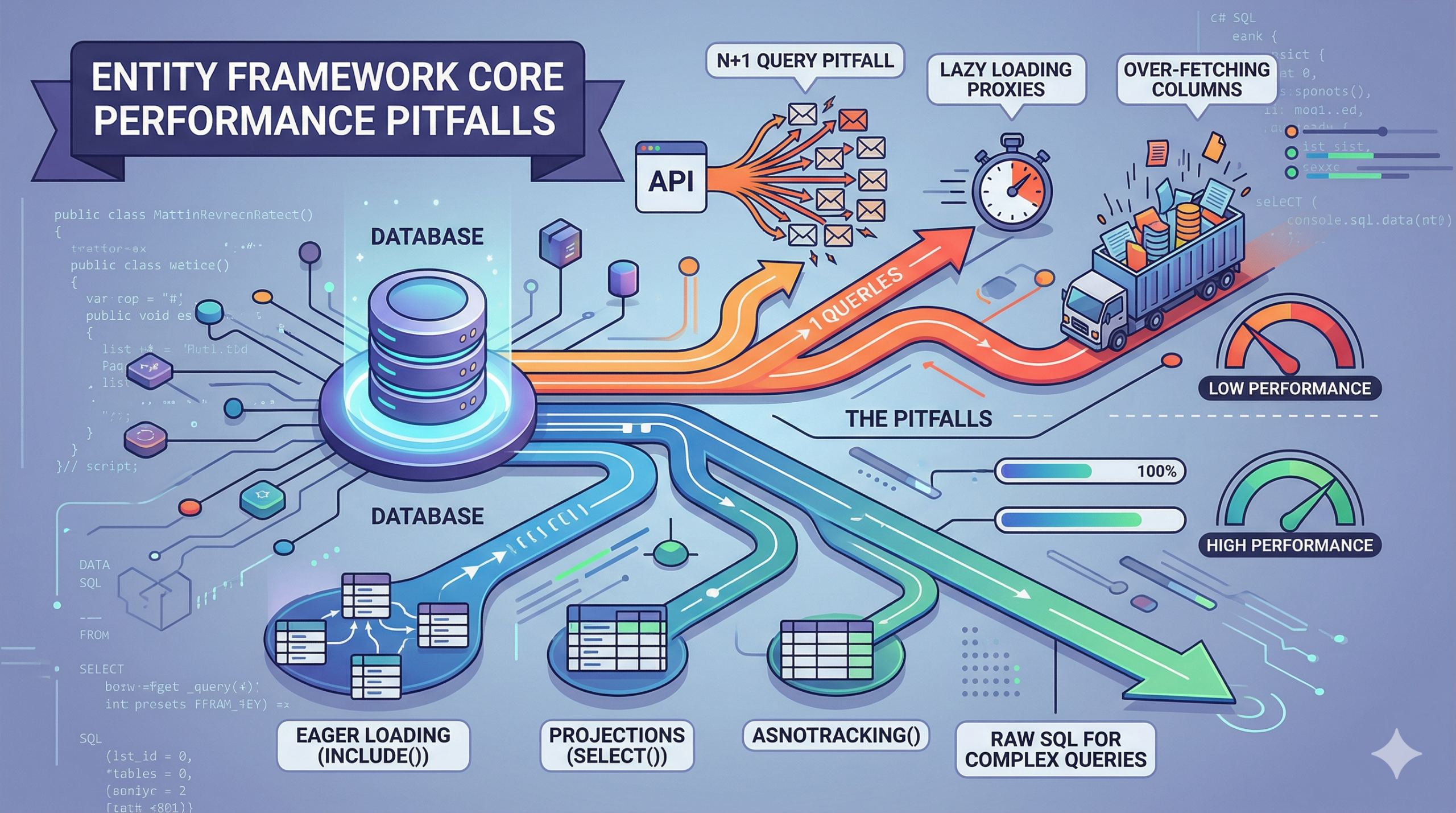
Entity Framework Core Performance Pitfalls: N+1, Tracking, and SQL

EF Core Performance

N+1 queries, eager loading, and when to use raw SQL A practical guide based on real production experience with C# code examples. Introduction: The hidden cost of convenience What happens when an endpoint that takes 200ms in development suddenly takes 14 seconds in production? I saw this first-hand while diagnosing a production API. The system … Read more